Small living rooms aren’t hard to decorate — they’re hard to arrange.
The layout matters more than the furniture itself.
A poorly placed sofa can block walkways.
An oversized coffee table can make the room feel cramped.
But the right layout can make even a compact space feel open and balanced.
In this guide, we’ll break down the most effective small living room layouts — with real examples you can copy.
Start With These 3 Layout Rules
Rule 1: Protect the Walkway
Always leave at least one clear path through the room.
If people have to turn sideways to move, the layout is wrong.
Rule 2: Size the Sofa First
Your sofa anchors the room. Everything else adjusts around it.
If you’re still choosing seating, see our guide on the Best Sofas for Small Living Rooms .
Rule 3: Avoid Pushing Everything to the Walls
Not every room benefits from wall-hugging furniture.
In some layouts, floating the sofa works better, we’ll dive more into this in the next section.
3 Proven Small Living Room Layouts
Sofa Against the Longest Wall (Best for Narrow Rooms)
Best for: Rectangular rooms and apartments.
Why it works:
- Opens central floor space
- Keeps walkways clear
- Visually simplifies the room
Layout Tip:
Pair with a slim coffee table and avoid bulky side chairs.
If you’re unsure what size or shape works best, see our guide to the best coffee tables for small living rooms .
Corner Layout (Creates a Cozy Zone)
Best for: Small square rooms or tight apartments.
Position the loveseat into a corner and add:
- One small accent chair
- A compact round side table
- A floor lamp to define the seating zone
Why it works:
- Uses dead corner space
- Creates intimacy without crowding
Floating Sofa (Best for Open-Plan Spaces)
Best for: Studio apartments or combined living/dining rooms.
Pull the sofa slightly away from the wall and place:
- A slim console table behind it
- A rug underneath to define the seating area
Why it works:
- Creates separation between zones
- Prevents the room from feeling like one undefined space
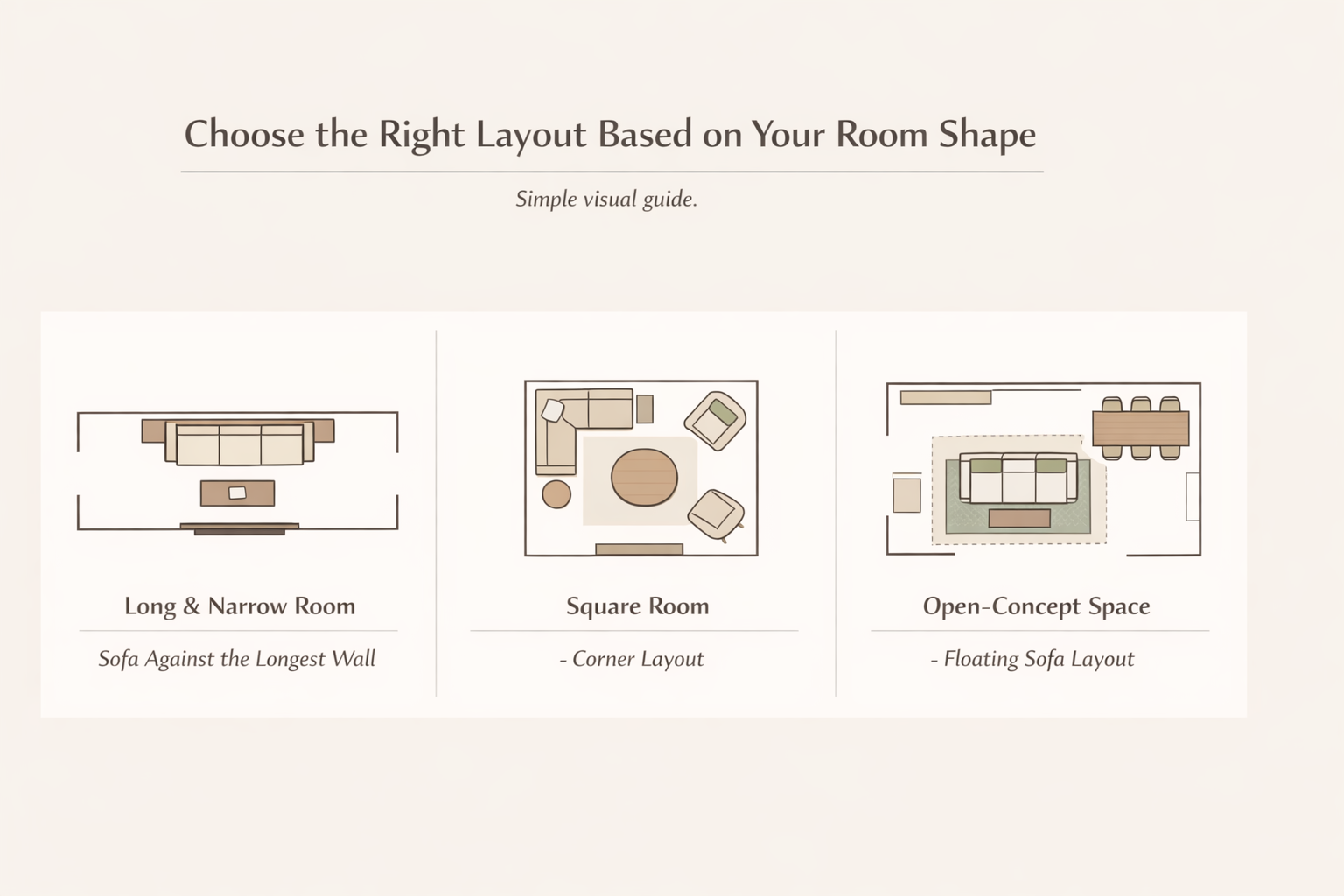
How to Choose the Right Layout for Your Room Shape
The shape of your room matters just as much as its size. A layout that works beautifully in one space can feel cramped or awkward in another. Start by identifying your room’s proportions, then match the layout accordingly.
If Your Room Is Long and Narrow:
Use the wall layout. Placing the sofa against the longest wall keeps the center open and protects your main walkway. Avoid deep sofas that eat into circulation space.
If Your Room Is Nearly Square:
Corner layout often balances best. Tucking seating into one corner creates a defined zone while leaving enough breathing room around the rest of the space.
If You Have an Open-Concept Apartment:
Floating layout adds structure. Pull the sofa slightly away from the wall to create separation between living and dining areas without adding bulky dividers.
Small Living Room Layout Mistakes to Avoid
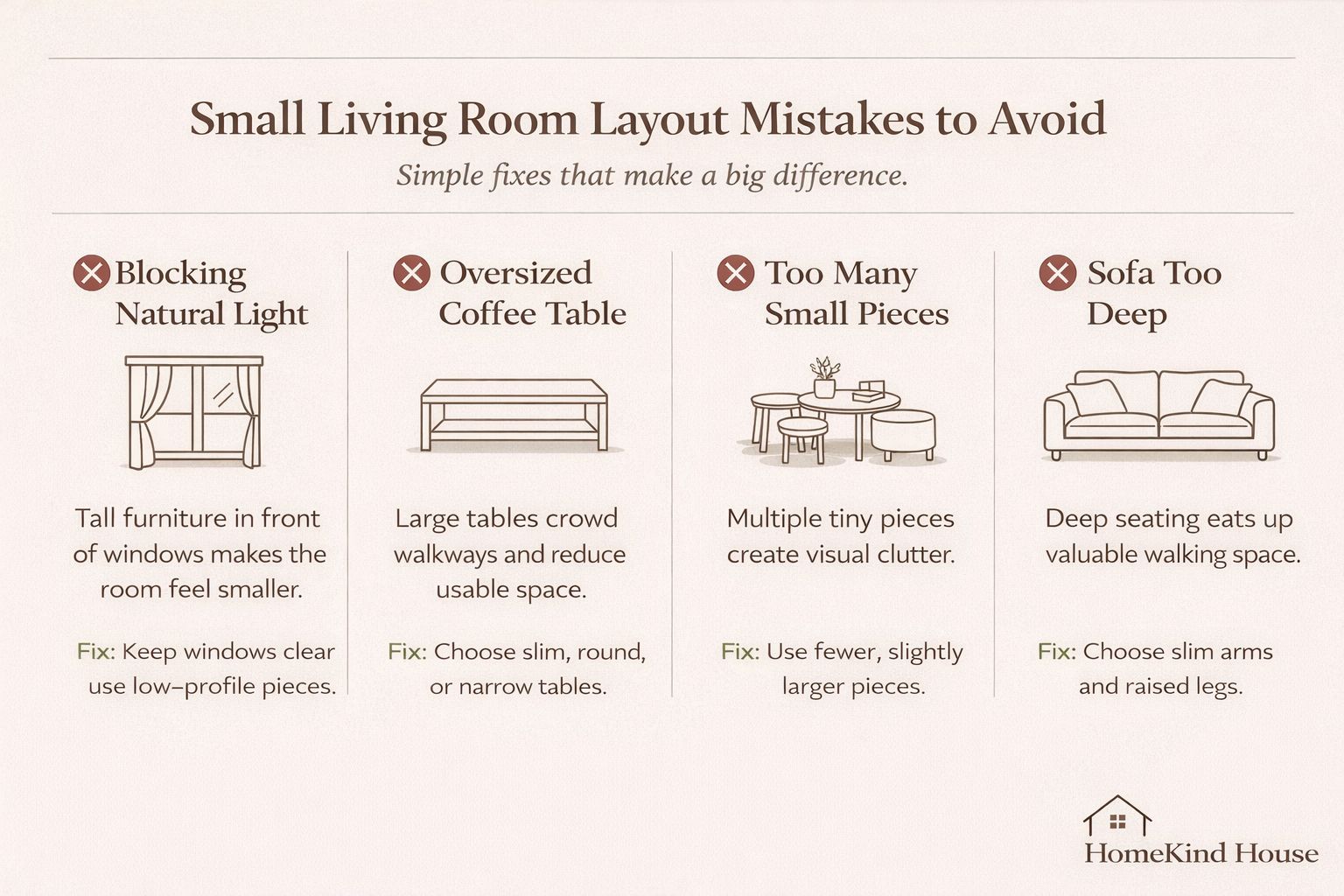
❌ Blocking Natural Light
Never place tall furniture in front of windows.
❌ Oversized Coffee Tables
Round or oval tables work better in tight rooms.
Round or oval tables work better in tight rooms. We break down the best shapes and sizes in our small living room coffee table guide .
❌ Too Many Small Pieces
Multiple tiny pieces create visual clutter.
❌ Choosing a Sofa That’s Too Deep
Deep seating eats walkway space.
If you’re still choosing seating, see our guide on the Best Sofas for Small Living Rooms .
Quick Furniture Sizing Guide for Small Rooms
Before buying furniture, check dimensions carefully. A few centimeters can completely change how a small room functions.
Loveseat width:
~150–200 cm (60–78 in)
Ideal for apartments and compact living rooms without overwhelming the space.
Standard sofa width:
~200–220 cm (78–87 in)
Works in small rooms only if walkways remain clear.
Walking space:
Leave at least 75–90 cm (30–36 in) for main pathways.
If you have to turn sideways to pass, the room is too tight.
Coffee table distance:
Keep 35–45 cm (14–18 in) between the sofa and table for comfortable reach without blocking movement.
For recommended widths, depths, and storage-friendly options, see our best coffee tables for small living rooms .
Sofa depth:
Look for 85–95 cm (33–37 in) depth in small rooms.
Avoid overly deep, lounge-style seating unless you have extra clearance.
Design details that help small rooms:
- Slim arms (saves 10–20 cm overall width)
- Raised legs (shows more floor, feels lighter)
- Open-base furniture (less visual bulk)
- Round tables in tight layouts
Small rooms reward precision. Measure twice before committing.
Final Thoughts
A small living room doesn’t need more square footage — it needs better placement.
Start with the sofa.
Protect your walkway.
Define your seating zone with intention.
When circulation feels natural and furniture proportions are balanced, the entire room feels bigger — even if nothing changes in size.
Layout first. Decor second.